The Serpent and the Creation Myth
Life on Earth is believed to have begun in water billions of years ago. Long before legs, hands, or wings, movement could be achieved through the body itself — bending, pulsing, and moving as wave through the surrounding field.
The origins of snakes as we know them today do not have one simple, settled beginning. What is accepted is that snakes are reptiles, and belong within the reptilian branch of life. Their exact ancestral pathway is still debated, with theories including burrowing, land-based, and aquatic origins.
Like other reptiles, snakes are air-breathing vertebrates. They are ectothermic — often called cold-blooded — meaning they rely strongly on external heat sources to regulate body temperature.
The central position that the serpent has assumed in human mythic culture over the ages and cultures across the world is not that every detail of its ancestry is settled, but that its form and movement carry an ancient pattern: life moving as wave through contact with the field.
Creation as the Dream
Australian Aboriginal culture is widely recognised as the world’s oldest continuous living culture, with evidence of Aboriginal peoples living on the continent for at least 65,000 years.
Across that immense span of time, creation knowledge has been carried through oral tradition, story, song, dance, ceremony, rock painting, and continuing relationship with Country.
Within many Aboriginal traditions, creation is spoken of through the Dreaming.
This is deeply important for the purpose of this paper.
Unlike many other creation traditions, the Dreaming does not centre on a supreme creator personality standing outside creation as God, Father, judge, or ruler from a separate realm of purity.
Nor does it require the created world to be understood as fallen, contaminated, lacking, or shame-bound by comparison with a perfect realm beyond it.
There is no outside place against which the dream must be measured.
There is just the Dreaming — the living field of Country, law, story, relationship, responsibility, and being.
It speaks of emergence into Country.
Country is not merely land in the physical sense.
It is place, relationship, law, memory, ancestry, water, animal, plant, sky, story, responsibility, survival, and belonging.
The Dreaming describes creation as a living field, but not as a field contained inside some larger outside boundary.
There is no separate place beyond the dream from which creation is managed.
There is no external moral world standing apart from it.
The dream-state is not inside something else.
The dream-state is the field.
It is all there is.
The self exists within the dream, not outside it.
And because the self exists within the dream, responsibility is not handed down from somewhere else.
It is lived from within.
This creates a very different moral structure.
The moral compass is not primarily external.
It is self-aware and self-responsible.
The Dreaming may therefore be understood, in this reading, as a sovereignty-powered participatory belief system.
The self belongs within it.
Acts within it.
Learns within it.
Survives within it.
And is responsible within it.
This should not be reduced to modern environmentalism, as though Aboriginal peoples were simply “caring for nature” out of compassion.
The relationship is deeper and more practical than that.
There is no separate environment over there and human life over here.
There is Country, and human life exists within it.
To live well is to participate with Country in ways known to sustain both people and place.
This is not care as sentiment.
It is interdependence as survival, law, and lived knowledge.
Country is not scenery, resource, or backdrop.
It is the living field within which human life, law, food, water, story, ancestry, and responsibility are held.
To act against Country is to act against the conditions of one’s own continuation.
The moral compass therefore arises from interdependence: the practical, spiritual, and cultural knowledge that life continues only through right participation with the field that sustains it.
The dreamer does not dominate the story.
The dream does.
The dream is the field.
The dream is the becoming.
The dream is creation emerging as Country.
And within this primal field, the serpent holds a central place.
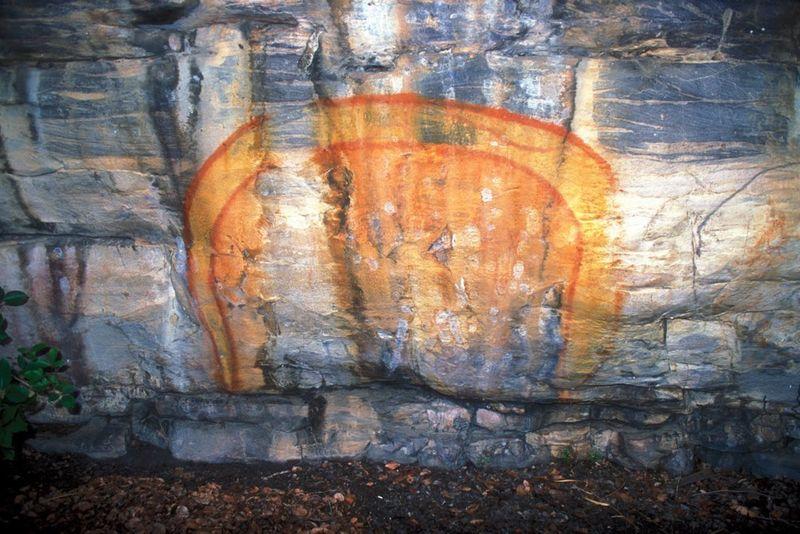
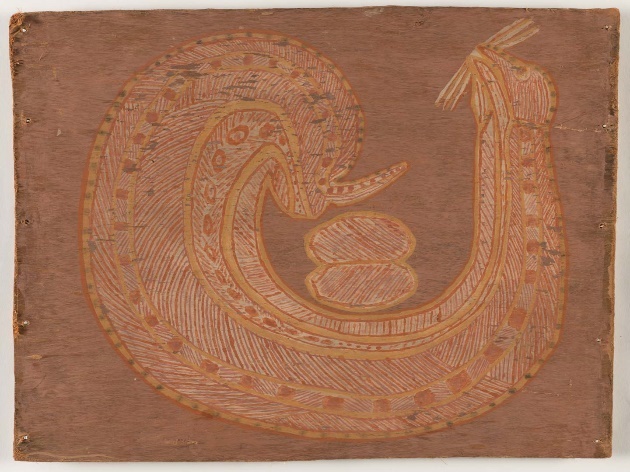
The Rainbow Serpent is among the great creation figures of Aboriginal Australia.
Different peoples hold different names, stories, meanings, and responsibilities connected with it, so it should never be reduced to one simple meaning.
But across many tellings, the Rainbow Serpent is associated with creation, water, fertility, landscape, movement, danger, law, renewal, and life.
The serpent moves through the Dreaming not merely as an animal, but as a force of creation.
Its movement shapes the land.
Its body becomes curve, river, valley, waterhole, and path.
Its presence links water, life, law, and Country.
In this way, the Rainbow Serpent gives us one of humanity’s oldest continuing images of the
It is not outside the dream.
It moves within the dream.
It does not explain the dreamer.
It reveals the dream becoming Country.
The Rainbow Serpent is creation moving as wave through the dream-field, bringing Country into form.
The Serpent Beneath and Within
Indian creation traditions reach deep into the ancient religious imagination of the subcontinent.
They are not one single story.
They are layered through Vedic hymns, later Hindu mythology, temple imagery, epic storytelling, yoga, Tantra, Buddhist and Jain traditions, and living devotional practice.
Within this immense field, the serpent appears with unusual depth.
It appears beneath creation.
It appears around divine power.
It appears in water, fertility, protection, danger, and hidden knowledge.
It appears coiled within the human body.
In Hindu imagery, Vishnu is often shown resting upon the cosmic serpent Ananta-Shesha, floating upon the cosmic ocean. The image is vast and still: the divine reclining upon the serpent, the serpent supporting the divine, the waters holding the scene, and creation emerging from a field of potential.
Here the serpent is not merely a creature.
It is support.
It is depth.
It is cosmic foundation.
The serpent also appears through the nāgas, powerful serpent beings associated with water, fertility, underground realms, protection, and danger. They are not simply good or evil. They carry force. They must be respected.
And then the serpent turns inward.
In kundalini traditions, serpent energy is imagined as coiled at the base of the spine. It is latent power, hidden but present. When awakened, it rises through the body as a movement of spiritual energy and awareness.
The coil becomes potential.
The rising becomes awakening.
The body becomes the path.
Indian serpent imagery therefore carries several powerful forms at once:
the serpent beneath creation the serpent as guardian of water and hidden realms the serpent as danger and protection the serpent as coiled inner energy the serpent as rising awareness
In this world of images, the serpent is not decorative.
It is structural.
It holds, guards, coils, rises, and reveals.
In the Indian imagination, the serpent is both beneath the world and within the body — hidden power waiting to move.
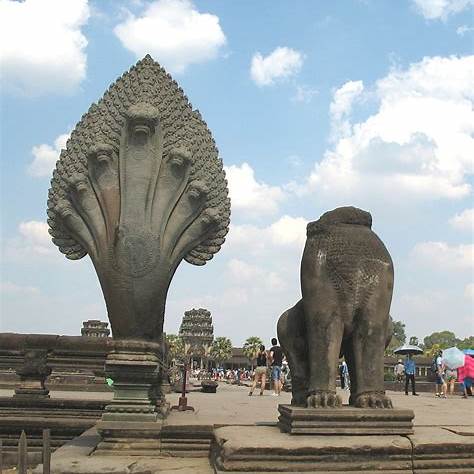
From India, serpent imagery travelled and transformed across Asia through religion, trade, art, architecture, and story. For example, the nāga (multi headed mythical serpent) tradition did not remain only an Indian figure. It entered wider Asian imagination, including the Khmer world of Cambodia, where serpent forms became monumental guardians of sacred passage.
At Angkor Wat, the nāga appears in stone at the threshold of temple space. It is not hidden in text. It is built into the act of entry. The serpent becomes passage, protection, water symbol, and sacred presence
The Dragon as Serpent of Sky, Water, and Order
From there, the serpent-form rises even further into Asian imagination through the Chinese dragon.
Chinese dragon traditions are ancient in their own right. They should not be treated as simply borrowed from India. But over time, Indian nāga imagery and Chinese dragon symbolism came into conversation, especially through Buddhism and wider cultural exchange.
In Chinese tradition, the dragon is not mainly a monster to be slain.
It is a powerful and often beneficent being.
It is associated with water, rain, rivers, lakes, oceans, fertility, good fortune, heavenly force, and imperial authority. Britannica describes the Chinese dragon, or long, as a majestic being connected with rivers, lakes, oceans, and the sky, originally a rain divinity and associated with fecundity and heavenly beneficence.
This gives the serpent-form a new height.
In Aboriginal Dreaming, the serpent moves through Country.
In Indian tradition, the serpent rests beneath creation and coils within the body.
In Cambodia, the nāga guards the threshold of sacred space.
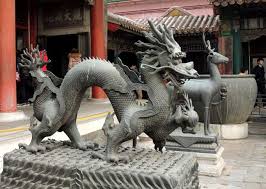
In China, the serpent becomes dragon: a being of water and sky, earth and heaven, motion and authority.
The dragon keeps the curve of the serpent, but expands it.
It grows claws, horns, scales, clouds, rain, and imperial power.
It becomes a creature of movement between worlds.
Not merely crawling upon earth, but rising through mist, storm, river, and sky.
The Chinese dragon therefore carries a different but related force.
It is not only emergence from below.
It is ascent.
It is weather.
It is prosperity.
It is command of flowing power.
It is the serpent-form lifted into cosmic order.
In China, the serpent does not disappear. It becomes dragon — the curve of life raised into water, sky, power, and blessing.
The Dragon as Serpent of Sky, Water, and Order
Chinese dragon traditions are ancient in their own right.
In Chinese tradition, the dragon is not mainly a monster to be slain.
It is a powerful and often beneficent being.
It is associated with water, rain, rivers, lakes, oceans, fertility, good fortune, heavenly force, and imperial authority.
This gives the serpent-form a new height.
In Aboriginal Dreaming, the serpent moves through Country.
In Indian tradition, the serpent rests beneath creation and coils within the body.
In Cambodia, the nāga guards the threshold of sacred space.
In China, the serpent becomes dragon: a being of water and sky, earth and heaven, motion and authority.
The dragon keeps the long, flowing body of the serpent, but it has transformed.
It has grown legs.
It has claws, horns, scales, and celestial power.
It rises through cloud and sky.
Yet unlike many Western dragons, the Chinese dragon is usually shown without wings.
Its flight does not depend on wings.
Its movement belongs to cloud, rain, river, mist, weather, and heavenly force.
Nor is its deepest meaning the fire-breathing destruction often associated with European dragons.
The Chinese dragon is more deeply associated with water, rain, rivers, clouds, fertility, prosperity, and imperial power.
It is not only emergence from below.
It is ascent.
It is weather.
It is prosperity.
It is command of flowing power.
It is the serpent-form lifted into cosmic order.
The Chinese dragon is also more closely tied to civilisation than to wilderness alone.
It belongs to water, rain, river, flood, authority, and the ordering power of the state.
In Chinese cultural memory, the control of water is deeply linked with rulership.
The legendary figure Yu the Great is remembered as the tamer of catastrophic floods and as a figure associated with the beginning of dynastic order.
In this sense, dragon power is not merely natural power.
It is the power to command, channel, and harmonise nature for civilisation.
In China, the dragon therefore becomes inseparable from imperial authority.
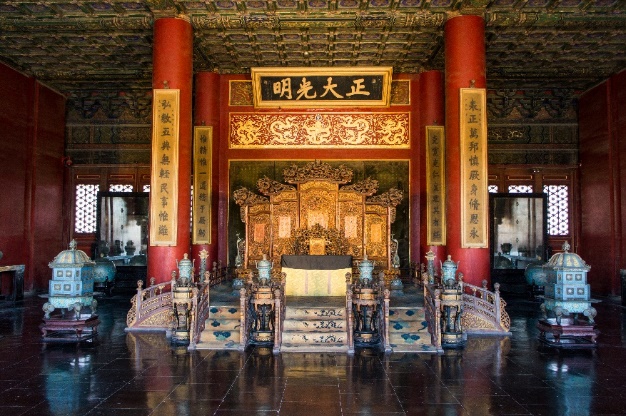
The supreme seat of the emperor was known as the Dragon Throne.
The emperor himself was associated with dragon power as the Son of Heaven, and imperial imagery repeatedly placed the dragon on thrones, robes, architecture, and ceremonial objects.
The dragon robe became one of the clearest visual expressions of this authority.
In later imperial China, robes bearing the five-clawed dragon were especially associated with the emperor and imperial rank.
The dragon was not only decoration.
It marked sacred power, rule, legitimacy, and cosmic order.
So in the Chinese world, the serpent-form rises into one of its most public expressions of authority.
It is no longer only beneath the waters or hidden within the body.
It sits at the centre of the empire.
It is carved into the throne.
It is worn on the body of the emperor.
It becomes the image of earthly rule aligned with heavenly order.
The emperor, seated on the Dragon Throne and clothed in dragon imagery, is therefore not merely decorated with a powerful animal.
He is symbolically invested with the capacity to hold dragon power: to stand between heaven, earth, water, people, and order.
In China, the serpent becomes dragon, and the dragon becomes authority clothed in cosmic power.
The Serpent Across the Americas
Across the Americas, the serpent appears again — but not in one single form.
It becomes feathered.
It becomes earthwork.
It becomes water-being.
It becomes carved power.
It becomes a figure of depth, height, danger, protection, renewal, and passage between worlds.
The details differ across cultures and regions, and they should not be collapsed into one meaning. But the recurrence itself is striking.
Again and again, the serpent appears where people are speaking about movement between realms: earth and sky, water and land, visible and hidden, life and death, human and sacred.
Central America: Mexico and the Feathered Serpent
Across Mexico and Central America, the serpent appears in one of its most striking transformed forms.
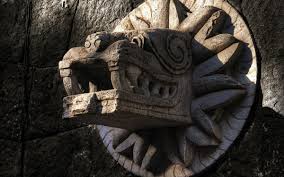
It becomes feathered.
In central Mexico, one of the great serpent figures is Quetzalcoatl, the Feathered Serpent. Quetzalcoatl was one of the major deities of the ancient Mexican world, and feathered-serpent representations appear as early as the Teotihuacán civilisation on the central plateau.
In the Yucatán Peninsula of Mexico, the Maya figure Kukulkan appears in related feathered-serpent form. At Chichén Itzá, the pyramid known as El Castillo is also associated with Kukulkan, and its architecture famously creates a serpent-like effect during the equinox, as shadow and stairway combine to suggest the descent of the serpent.
The image is powerful.
The serpent has not been left behind.
It has been given feathers.
The creature of curve, body, earth, and movement now carries the sign of air, height, flight, and ascent.
The Feathered Serpent becomes a bridge between realms:
earth and sky body and spirit water and wind death and renewal knowledge and power
It is not merely an animal.
It is a being of passage.
It crosses boundaries.
It joins what is below with what is above.
It brings the serpent-form into temple, calendar, architecture, story, and sacred imagination.
In this world, the serpent does not only crawl.
It rises.
It carries feathers.
It becomes a sky-serpent.
In Central America, the serpent becomes feathered — the body of earth joined to the movement of sky.
South America: Peru, the Andes, and the Serpent of Depth
Further south, serpent imagery appears powerfully in the Andean world, especially through Peru and the wider Inca cultural sphere.
One important serpent-like figure is Amaru, often understood as a serpent or dragon-like being in Andean mythology.
Here the serpent again belongs to depth.
It is linked with rivers, rain, fertility, underground places, hidden power, renewal, and the unseen movements of the world.
But it is not only below.
Like many serpent figures, it crosses boundaries.
It can belong to the underworld, the earthly world, and the spiritual world.
It carries the sense that creation is layered.
There is what is seen.
There is what is hidden.
There is what moves between them.
In the Andean imagination, the serpent becomes a being of depth, renewal, and passage.
It reminds us that what moves beneath the surface may still shape the visible world.
In South America, the serpent carries the power of depth — water, earth, fertility, transformation, and renewal moving beneath the visible world.
North America: The Serpent Made into Land and Wood
Across North America — in the lands now known as the United States and Canada — serpent imagery also appears in many Indigenous traditions.
These traditions are diverse and should not be reduced to one meaning.
But again, the serpent appears as a powerful figure.
In some traditions, serpent beings are associated with water, depth, danger, medicine, transformation, and spiritual power.
In some places, the serpent is not only told in story.
It is made into land.
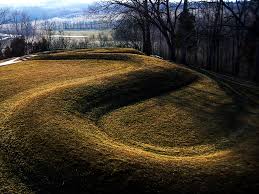
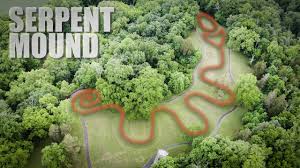
One of the clearest examples is the Great Serpent Mound in present-day Ohio, USA — a vast earthwork shaped like a serpent, winding across the landscape. It is recognised as one of the most important prehistoric effigy mounds in North America.
Here the serpent is not merely painted, carved, or spoken.
It is shaped into Country.
It becomes a body across the earth.
It becomes movement written into landform.
In Canada, particularly among Pacific Northwest Coast peoples, the serpent appears in carved and ceremonial form through beings such as the Sisiutl, or Sisiyutł — a powerful double-headed sea serpent.
The Sisiutl is associated with supernatural power, danger, protection, transformation, warrior strength, and mediation between the natural and supernatural worlds. It may appear in masks, house fronts, poles, and other carved forms.
Here the serpent is not only land-form or water-being.
It becomes crest.
It becomes guardian.
It becomes carved presence.
It becomes supernatural power held in cultural form.
So across North America, the serpent appears through both earth and wood:
the serpent shaped into landscape and the serpent carved into cultural memory
In both cases, it is more than animal image.
It marks the presence of power.
It stands at the edge of visible and hidden worlds.
It can heal and threaten.
It can protect and transform.
It can belong to land, water, ceremony, story, and spirit.
In North America, the serpent appears as land-form, water-being, carved guardian, danger, medicine, and power moving between worlds.
The Serpent as Passage
Taken together, the serpent across the Americas does not carry one single meaning.
It is feathered in Mexico and Central America.
It moves through depth in the Andes.
It is shaped into land in Ohio.
It is carved into supernatural presence on the Pacific Northwest Coast.
But across these differences, the same broad pattern keeps returning.
The serpent appears where cultures are speaking about passage.
Passage between earth and sky.
Passage between water and land.
Passage between visible and hidden.
Passage between danger and medicine.
Passage between death and renewal.
Passage between human life and sacred power.
Across the Americas, the serpent is not one thing.
It is a recurring sign of movement between worlds.
The serpent appears where boundaries are crossed, where power moves, and where the visible world opens toward the unseen.
__________________________________________________________________________
Europe, Africa, and Later Religious Memory
The serpent does not disappear as the story moves through Europe, Africa, and the later Abrahamic traditions.
It continues to appear wherever cultures are speaking about power, transformation, authority, healing, danger, renewal, old religion, and new order.
In ancient Europe, serpent imagery appears within older earth-based and sacred traditions, though the surviving record is uneven and must be handled carefully.
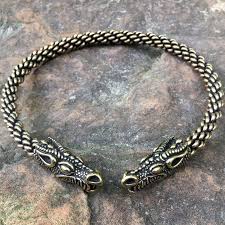
The torc, or torque, offers one example of a curved power-symbol. It was a rigid, twisted neck ring worn across parts of ancient Europe as a sign of rank, status, warrior identity, or sacred authority. Not every torc was a serpent, but some carried animal, serpent-like, or dragon-like terminals. The important point is not that every torc was literally a snake. It is that curved, encircling forms could become visible signs of power worn on the body.
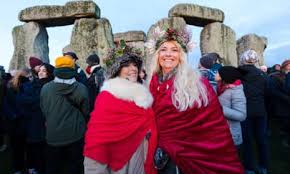
In Britain, Roman power directly confronted Druidic religion. The famous assault was on Mona — modern Anglesey — remembered as a stronghold and refuge of the Druids and Druidic tradition. There, Roman authority moved against an older spiritual order and sought to dismantle its authority over the local population.
Later, in Ireland, after the Roman era, the famous legend of St Patrick banishing the snakes carries another layer of symbolic memory. Ireland has no native snakes, so the story is not usually understood as literal zoology. It is often read as a symbolic image of Christianity moving to displace older pagan or earth-based religious traditions.
Whether the historical details are simple or complex, the image itself is clear.
The serpent becomes a European example of an older power being driven out, transformed, or absorbed by a newer order.
In Africa and later African diasporic traditions, the serpent appears very differently.
In Haitian Vodou, sometimes rendered in English as Voodoo, Damballa is one of the great serpent figures. He is often imagined as a primordial serpent connected with creation, water, wisdom, purity, peace, continuity, and ancient life-force. His presence is not merely danger. It is sacred depth.
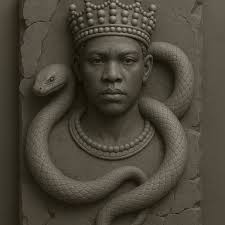
Alongside Damballa is Ayida-Weddo, often described as a rainbow-serpent figure. She is associated with fertility, rainbows, water, wind, thunder, snakes, and the joining of earth and heaven. Together, Damballa and Ayida-Weddo carry a serpent-rainbow imagery that echoes creation, continuity, life, and cosmic relationship.
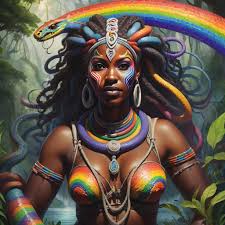
Here the serpent is not banished.
It is honoured.
It is not only old religion resisting new religion.
It is sacred presence within the living field.
It is wisdom, water, creation-force, and continuity.
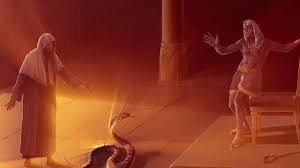
In Islamic tradition, the staff-serpent image appears again through the story of Musa — Moses — and Pharaoh. In the Qur’an, Moses throws down his staff before Pharaoh and it becomes a clear serpent. In this recounting, a recurring core image returns: fixed form becomes living expression, and divine authority to create is revealed before worldly power.
Across these traditions, the serpent keeps appearing at charged thresholds:
old religion and new religion authority and challenge water and life-force danger and protection banishment and reverence fixed form and living power earthly rule and sacred authority
The meanings differ.
They should not be collapsed into one.
But the recurrence remains striking.
The serpent appears wherever cultures are negotiating power at the boundary: between old and new, life and death, purity and danger, authority and transformation.
Genesis and Exodus: The Serpent at the Threshold
Within the Judaic-Christian tradition, the serpent appears at two extraordinary thresholds.
The first is in Genesis.
The second is in Exodus.
In Genesis, the serpent appears near the beginning of human experience.
It stands at the threshold where innocence gives way to knowledge, where containment gives way to embodiment, and where the human story moves out of the Garden into consequence, labour, birth, death, and history.
In Exodus, the serpent appears again, but now in a very different setting.
Not the Garden.
Not the beginning of humanity.
But the court of Pharaoh — the centre of imperial power.
One story opens the human journey into embodied knowledge.
The other opens the Jewish journey out of bondage.
Both are departures.
Both are irreversible crossings.
Both are moments where one condition of existence gives way to another.
Genesis: The Serpent and the Bite
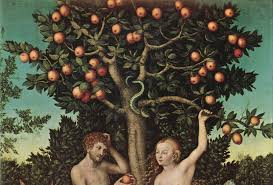
In Genesis, the serpent is already in the Garden.
It does not arrive from outside creation.
It belongs within the field before the decisive movement occurs.
The Garden contains God, land, trees, fruit, animals, Adam, Eve, and serpent.
All are present before the crossing takes place.
This matters.
The serpent is not merely an outside invader.
It is part of the original symbolic landscape.
In this reading, Adam may be understood as form.
Eve may be understood as potential drawn from form.
The tree and fruit may be understood as embodied knowledge — life-experience made available.
The serpent may be understood as emergence — the catalytic movement that brings form and potential into lived participation.
The fruit is not only forbidden object.
It is experience made available.
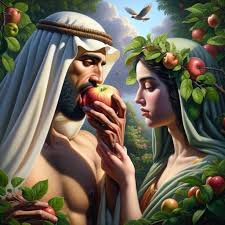
The bite is not only disobedience.
The bite is embodiment.
To eat is to take something into the body.
To eat is to internalise.
To eat is to cross from seeing into participating.
Adam and Eve do not merely learn about experience.
They embody it.
The bite is therefore scaled.
It is not the whole of potential being consumed.
No finite form can embody the whole of infinite potential.
A bite is a portion.
A taste.
A first taking-in.
Once the bite is taken, the Garden can no longer remain only containment.
Experience has entered the body.
Knowledge has entered form.
Potential has crossed into lived reality.
The human story turns.
Adam and Eve leave the Garden.
In the usual reading, this is exile.
And it is.
But symbolically, it is also emergence.
They move from contained innocence into the field of consequence.
From protected possibility into embodied life.
From untested form into lived experience.
So in Genesis, the serpent stands at the beginning of human becoming.
Not simply as villain.
Not simply as tempter.
But as the threshold figure through which form and potential enter embodiment.
In Genesis, the serpent opens the threshold of embodied human experience.
Exodus: The Staff of Life
In Exodus, the serpent appears again.
But now the setting has changed completely.
This is not the Garden.
This is Pharaoh’s court.
The story is one of liberation: the movement of the Jewish people out of bondage, through uncertainty, toward covenant, identity, and future.
Moses is entrusted to lead that journey.
His authority is not merely personal.
It is divine commission.
And the staff becomes the visible sign of that authority.
The staff is already rich with meaning.
It is the traveller’s tool.
It supports the body on long journeys.
It tests uncertain ground.
It can defend against danger.
It guides animals.
It marks leadership.
It belongs to shepherd, traveller, elder, and prophet.
But in Exodus, the staff becomes more than a tool.
It becomes the sign of divine authority carried into the court of empire.
This matters because Egypt already held serpent symbolism at the centre of royal power.
The Pharaoh was not merely a political ruler.
Egyptian kingship carried sacred authority.
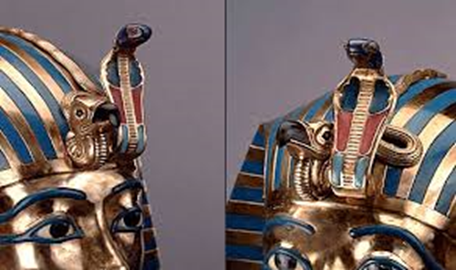
The raised cobra, known as the uraeus, was worn on the royal brow as a sign of sovereignty, divine protection, and kingly power.
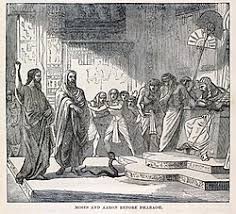
So when Moses and Aaron stand before Pharaoh, the serpent is already present in the room.
It is already part of Pharaoh’s symbolic authority.
The court of Egypt is already serpent-crowned.
This makes the staff-serpent sign profoundly charged.
Aaron casts down the rod before Pharaoh, and it becomes a serpent.
Pharaoh’s magicians do the same.
They cast down their rods, and they too become serpents.
But there is another layer.
Pharaoh’s magicians do not act as one solitary figure. They represent the many arms of imperial authority: court, priesthood, ritual specialists, advisers, and the wider machinery of power.
Their rods are many.
Aaron’s rod is one.
In civilisational terms, imperial power often grows through multiplication — more officials, more structures, more ceremonies, more channels of command.
Authority becomes distributed through bureaucracy and governance.
The greater the number, the greater the appearance of power.
But in the Exodus image, number does not decide authority.
The many rods of Pharaoh’s court become many serpents.
Yet Aaron’s single serpent swallows them.
The sign is clear:
The many can express power, but they do not necessarily hold the greater authority.
The image is not merely a contest of wonders.
It is a contest of authority.
Pharaoh holds serpent power within the Egyptian imperial order.
Moses and Aaron reveal serpent power from beyond that order.
One serpent authority is claimed by empire.
The other arrives as divine commission.
And one devours the other.
This is not only magic.
It is civilisational symbolism.
Fixed form becomes living force.
The straight staff becomes the moving curve.
The instrument of journey becomes animated life.
The staff becomes the Staff of Life.
Aaron’s serpent swallowing the serpents of Pharaoh’s magicians is therefore not merely a sign of victory.
It is a statement of hierarchy within the field.
When two claims of authority are forced into the same boundary, the lesser must yield to the greater.
Pharaoh’s court had been stabilised under Egyptian authority, with the serpent already enthroned in royal symbolism through the uraeus.
But when a higher authority enters that same boundary, the existing order can no longer remain supreme.
The lesser serpent-power is absorbed by the greater.
When higher authority enters a boundary stabilised by lesser authority, the lesser must yield to the greater.
Aaron’s serpent does not merely defeat Pharaoh’s serpents.
It reveals that the authority to bring fixed form into life is not held exclusively by empire.
Two Serpents, Two Directions of Change
The serpent is present on both sides of the Exodus confrontation.
Pharaoh already stands within a serpent-crowned order, where the cobra marks sovereignty, divine protection, and imperial authority.
Moses and Aaron bring another serpent-sign into that same field: the staff becoming living force.
For Pharaoh, this change represents the loss of established order.
His authority over the Jewish people is challenged.
The stability of his rule begins to fracture.
What had seemed fixed begins to weaken.
For Moses and the Jewish people, the same change represents the beginning of liberty.
It opens the path out of bondage.
It marks the first movement toward a future outside Pharaonic control.
One side experience the serpent as ending.
The other experiences it as beginning.
Both are change.
Both are threshold.
Both are transformation.
In every encounter, there may be two opposite outcomes.
The same event can move one form toward stability while moving another away from it.
In Exodus, Aaron’s serpent does not simply defeat Pharaoh’s serpents.
It marks a change in the direction of stability itself.
Pharaoh’s order begins to lose coherence.
The Jewish people begin moving toward a new form of collective life beyond Egypt.
One side experience the serpent as loss.
The other experiences it as liberation.
Both are transformation.
The serpent does not belong only to the winner or the loser.
It appears at the point where power changes hands and history turns.
The Agent of the Eternally Becoming
The serpent is present in both Genesis and Exodus because it appears wherever becoming is underway.
In Genesis, it stands at the threshold where human experience moves into embodiment.
In Exodus, it appears where Pharaoh’s order begins to fracture and the Jewish people begin moving toward liberation.
The same figure appears in both stories, but not with the same meaning.
In Genesis, the serpent opens the way into knowledge, embodiment, and consequence.
In Exodus, the serpent appears where imperial authority is confronted by a higher power, and history turns toward freedom.
In both, the serpent marks a crossing.
One condition gives way to another.
One form of stability is disturbed.
Another begins to emerge.
The serpent does not belong only to one side of the encounter.
It appears at the point of transformation itself — where change enters the field and existence begins to move in a new direction.
The serpent appears where existence crosses from one condition into another.
And deeper still:
The serpent is the agent of the eternally becoming.
Final Reflection
Across these traditions, the serpent is never only one thing.
It is creation-force.
It is danger.
It is wisdom.
It is water.
It is healing.
It is hidden power.
It is sacred authority.
It is old religion and new religion.
It is the creature of earth that becomes feathered.
It is the nāga guarding the threshold.
It is the dragon clothed in imperial power.
It is the serpent made into land, carved into wood, lifted in scripture, and remembered in story.
The meanings differ.
They should not be collapsed into one.
But the recurrence is striking.
Again and again, the serpent appears where a boundary is being crossed.
Between water and land.
Between earth and sky.
Between hidden and visible.
Between danger and healing.
Between old order and new order.
Between innocence and knowledge.
Between fixed form and living force.
Between death and renewal.
This is why the serpent matters to this paper.
Not because it proves one universal doctrine.
Not because every culture means the same thing by it.
Not because the biological story of snakes is simple or settled.
But because the serpent keeps appearing wherever human beings have tried to speak about transformation.
Its body moves as wave.
Its path is contact.
Its power is movement.
It does not simply reverse.
It turns.
It coils.
It sheds.
It returns.
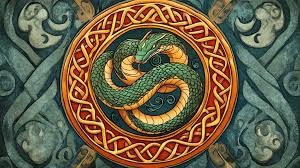
And in the ouroboros, it completes the circle by meeting itself again.
The serpent eating its own tail becomes one of humanity’s clearest images of return: not return as ending, but return as renewal.
The cycle consumes itself so that it may begin again.
So perhaps the serpent has endured because it carries an image older than explanation.
A body moving as wave through the field.
A curve where straight lines fail.
A threshold between what is and what may become.
A sign that life does not move only forward.
It turns.
It transforms.
It sheds.
It returns.
It begins again.
If the proposition is whether or not creation can be considered as consciousness coming to know itself through reflection, then the serpent gives that question a living image.
It is the movement within the dream.
The curve within the field.
The first stirring of potential into form.
The bite that brings experience into the body.
The staff that becomes life.
The danger that becomes healing.
The ancient body that remains relevant.
The circle that returns to itself.
The serpent is not merely creation’s symbol.
It is the image of creation’s movement.
The serpent hides in plain sight because emergence always does.