Habitats and the Sensory Trap
Engineering can build a habitat. The question is whether a habitat can replace a world.
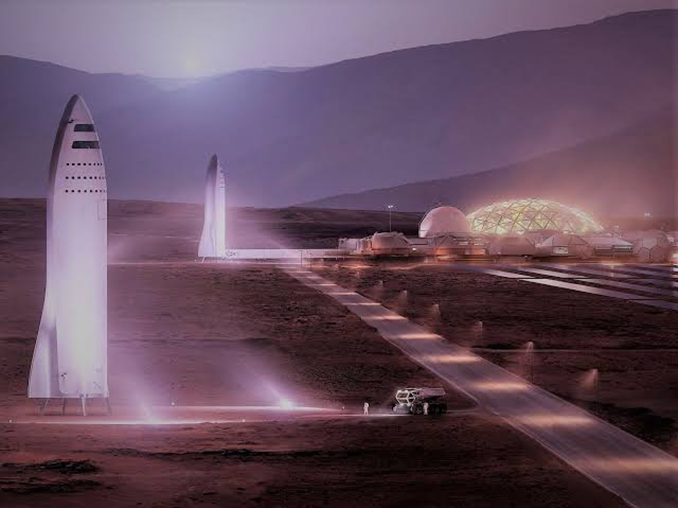
Humanity has become remarkably good at engineering environments.
We build cities in deserts.
We construct tunnels beneath mountains.
We work beneath the sea.
We live in Antarctica.
We maintain a permanent human presence in space.
Engineering has repeatedly demonstrated its ability to overcome environmental barriers.
Mars represents the next great engineering challenge.
The question usually asked is whether we can build habitats capable of keeping people alive.
That is an engineering question.
The more important question is whether those habitats can sustain the full experience of being human across an entire lifetime—and eventually across generations.
The distinction matters.
Survival and flourishing are not the same thing.
A habitat can provide breathable air, clean water, food, shelter and protection from radiation.
It can regulate temperature, recycle waste, generate power and sustain life indefinitely.
It can create gardens.
It can produce food.
It can simulate day and night.
It can become a remarkable achievement of engineering.
But can it recreate the conditions through which human biology and psychology evolved?
We already possess part of the answer.
Remote industrial operations throughout Australia, particularly the FIFO mining communities of the Pilbara, demonstrate that prolonged isolation, monotony and confinement require continual psychological management.
NASA reaches similar conclusions.
Its Human Research Program identifies isolation, confinement, distance from Earth, altered gravity and hostile environments as major human hazards.
Its CHAPEA Mars analogue missions exist because behavioural health is recognised as being just as important as engineering performance.
These environments are studied precisely because they place measurable pressure on human wellbeing.
Mars would not experience these conditions as temporary missions.
They would become permanent.
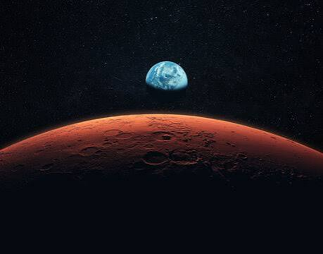
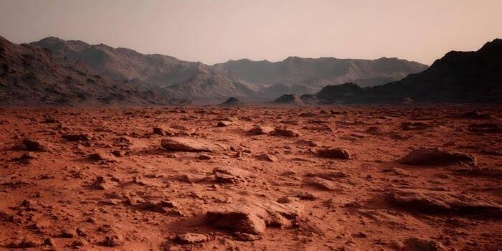
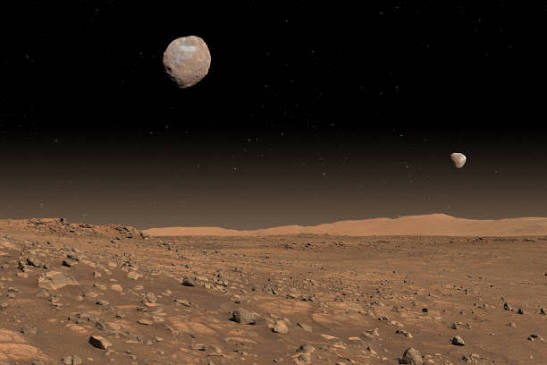
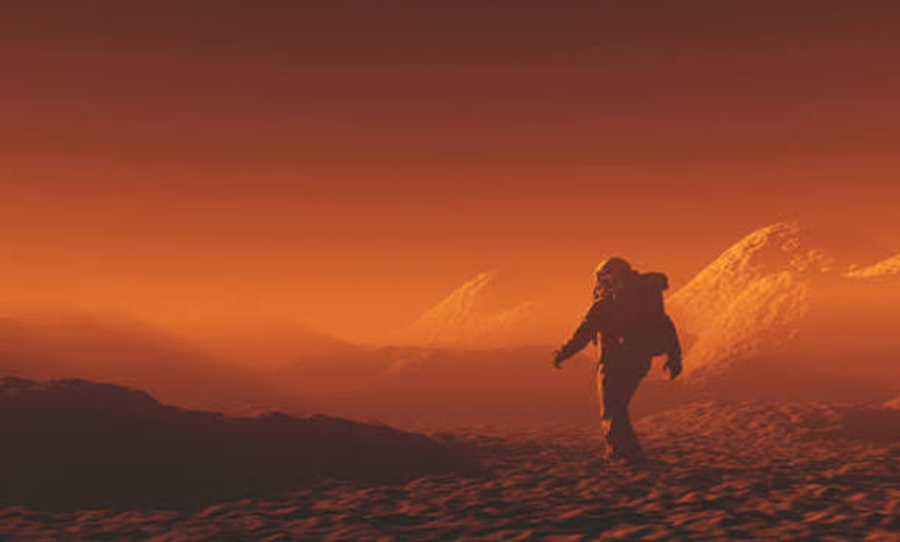
A habitat may be engineered. Mars itself cannot.
This image reminds us of something engineering cannot change.
Mars is fundamentally different from Earth.
There are no forests.
No rivers.
No oceans.
No birds.
No changing seasons.
No rain.
No smell after a storm.
No open sky filled with breathable air.
No place where a person can simply wander into nature.
Even with more than eight billion people, Earth remains an immense living planet.
Anyone willing to travel far enough can still stand alone beneath an open sky, disappear into wilderness or experience nature without permission.
That experience is not merely visual.
It is immersive.
It is physical.
It is biological.
It is psychological.
It is relational.
It is the experience of belonging to a living planet.
Mars may create ecological substitutes.
Habitats may contain gardens.
Greenhouses.
Walking tracks.
Artificial streams.
Virtual reality environments.
All of these may become essential.
Yet none of them recreates Earth.
Every tree will consume resources.
Every stream will be engineered.
Every ecosystem will require maintenance.
Every square metre of green space will be infrastructure.
Unlike Earth, ecological space may itself become an allocated resource.
Access may require scheduling.
Privacy may become limited.
Solitude may become difficult.
Nature may become something experienced collectively rather than individually.
Virtual reality may eventually become almost indistinguishable from reality.
If that proves insufficient, future generations may consider direct neural interfaces capable of creating immersive sensory experience within the human nervous system itself.
We do not need Mars to confront this possibility.
Human neural interface research is already underway on Earth.
Today those technologies are directed primarily towards restoring lost function.
Tomorrow they may enhance normal human capability.
On Mars they may eventually become something else again.
Adaptation.
There is an elephant in the room.
At what point do we stop adapting the environment to suit the human...
...and begin adapting the human to suit the environment?
That is a civilisational threshold.
Not an engineering one.
Once adaptation becomes a fact of life, it may no longer be experienced as a moral question.
It becomes normal.
It becomes culture.
It becomes expectation.
It becomes inheritance.
By then, the permission slip has already been signed.
For those born on Mars, Earth may become history story rather than home.
They will share humanity's ancestry.
But their civilisation may gradually express that heritage differently.
Their expectations of privacy.
Their understanding of autonomy.
Their experience of community.
Their concepts of empathy.
Their morality.
Their ethics.
Their religious expression.
Their understanding of freedom.
Their relationship with nature.
Even their understanding of what gives life meaning.
None of these changes need be deliberate.
They may simply emerge through the lived experience of a different world.
Place has always shaped civilisation.
Mars will be no exception.
Earth-human and Mars-human civilisation may continue to share common ancestry while expressing that inheritance in profoundly different ways.
The principles may remain recognisably human.
The civilisation through which those principles are lived may not.
This is why the permission question belongs to Earth.
Not because humanity should never settle Mars.
But because once a Martian civilisation becomes self-sustaining, the opportunity to determine its founding conditions will have passed.
The future will belong to those who inherit it.
The question is therefore not whether humanity can build habitats on Mars.
The question is whether humanity fully understands what those habitats may ultimately build into the future of our species.